



Building an AI-Powered Mental Health App for Emotional Wellness
- 93% emotion-detection accuracy on validation data
- ~1.8 sec median time to a mood-aware reply
- 0 user messages sent to third-party APIs
A US digital health startup came to LITSLINK for mental health app development that could offer emotional support between therapy sessions without a single message leaving its own cloud. We built an AI-powered prototype that reads how a person feels, replies in either of two languages, and keeps every conversation inside a private AWS environment. It serves adults dealing with everyday stress and anxiety, and the mental health professionals who want a clearer picture of how clients are doing between appointments.
Project Details
The client, a US digital health startup working under NDA, planned to sell its product to clinics and mental health organizations. That meant passing their security review before it could reach a single patient. What it wanted was a companion for the days between appointments: something that notices a hard week, suggests a coping step, and knows when to bring in a human.


Business Challenge: Delivering Private Emotional Support with AI
Many mental health apps pipe every message to a public LLM API and stop there. For a journaling toy that might pass. For a mental health application a mental health center offers to its patients, it fails the first security questionnaire, because a chat about panic attacks becomes patient data under the Health Insurance Portability and Accountability Act the moment a covered provider is involved. Startups that develop a mental health product for clinical buyers hit this wall early.
The client had already tried the shortcut. Its first proof of concept ran on a hosted model, answered every message in the same polite tone, spoke one language, and stored logs on a vendor’s servers. Around 40 early testers used it. Most opened it about twice, then stopped, and 14 of 22 written comments said some version of “it didn’t notice I was upset.” Existing mental health apps the team benchmarked had the same blind spot, which left a real gap in the mental health app market.

Privacy by Design
User data had to stay isolated in a private environment, in line with HIPAA requirements. That ruled out hosted LLM APIs, shared logging tools, and any analytics script that could read message text, so regulatory compliance became a day-one requirement.

Emotional Awareness
The system needed to recognize how a user feels and adapt its replies. Someone describing a sleepless week and someone sharing good news should not get the same tone, length, or suggestion.

Bilingual Conversations
The experience had to work naturally in two languages, including users who switch mid-sentence. Translating English replies after the fact sounded stiff and flattened the emotional nuance.
Technologies Behind the Emotional Wellness App



Our Mental Health App Development Solution
One rule shaped the architecture: no user text leaves the client’s AWS account. Everything else followed from it.
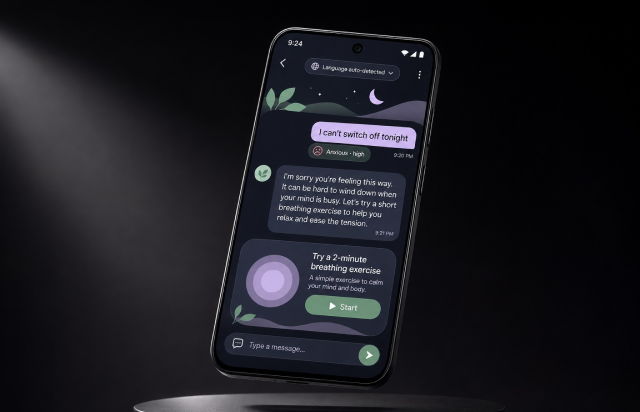
We self-hosted Qwen 2.5 32B on GPU instances inside a private VPC, with no public endpoint and no outbound internet route from the inference subnet. In side-by-side tests, 32B was the smallest model that held a warm, coherent tone in both languages; the 7B and 14B versions slid into generic advice after about six turns. Emotion detection runs as its own classifier next to the model, so the system knows how someone feels before it decides what to say. Our AI chatbot development team wrote the conversation logic around that order of operations.
The prototype is not a therapist and never pretends to be. It does not diagnose a mental health disorder, screen for mental disorders, or replace traditional therapy and mental health treatment. It offers mood tracking, breathing exercises, and coping strategies that support mental well-being and help people reduce stress. When mental health symptoms persist across several check-ins, it routes people to professional support, including a teletherapy booking with one of the client’s licensed therapists. These are the core features users touch every day:
Private AI Infrastructure on AWS
Qwen 2.5 32B runs on dedicated GPU nodes in a private VPC with encrypted storage, so prompts, replies, and logs stay in one AWS account. No message text reaches a third-party API, which settled the client's biggest data protection question.
On-Premise Emotion Detection
A fine-tuned classifier tags each message with one of 7 emotional states and an intensity score in about 120 ms. It hit 93% accuracy on a validation set of roughly 6,000 labeled messages per language.
Bilingual Conversational Engine
The engine detects language per message and answers in kind, mixed-language chats included. Tone rules, coping scripts, and safety phrases were written natively for both languages, not machine-translated.
HIPAA-Aligned Data Isolation
Encryption at rest and in transit, least-privilege access controls, and multi-factor authentication for every admin. Each time someone opens a conversation, the read lands in an audit log the compliance lead can export.
Mood Tracking and Progress Insights
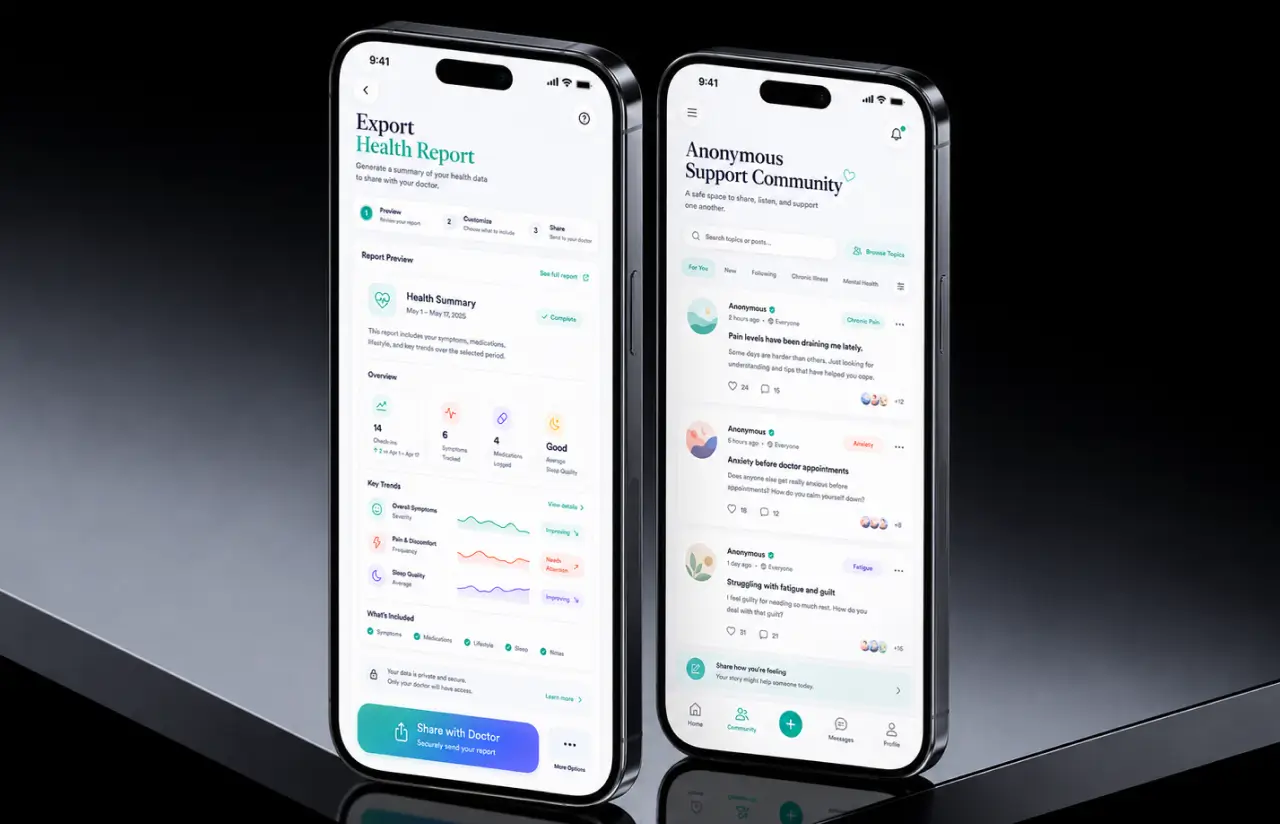
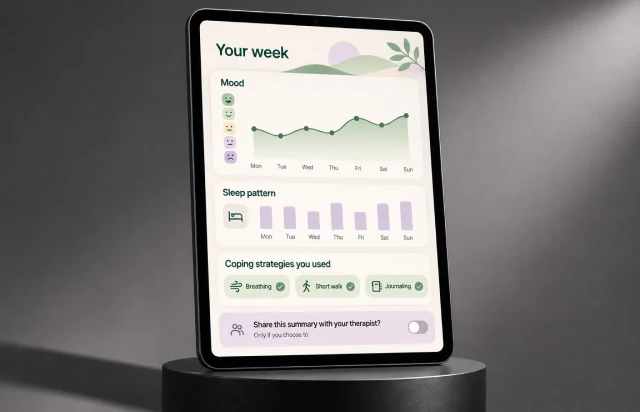
A 10-second daily check-in logs mood and sleep patterns. Weekly charts handle progress tracking, and users can share a summary with their therapist before sessions, only if they choose to.
Crisis Escalation Safety Layer
A separate risk model screens every message. When it spots crisis language, the AI steps aside, shows mental health resources and emergency services numbers, and alerts an on-call clinician on the client's side.
— Agile Development Methodology
Project Journey: From Idea to HIPAA-Compliant Release
A mental health app involves more compliance work than most products, so discovery came first and shaped the entire development process. Over two weeks we helped the client conduct market research with two partner clinics, mapped every path patient data could take, and set the 7 emotional states with a clinical psychologist. Model choice and the AWS landing zone were locked by sprint 3, so the essential features never waited on infrastructure.
How We Delivered This Mental Health App Project
- We define the project goal together, agree on priority features, and set a realistic delivery date and budget.
- We build a ranked list of everything the product needs, starting with what matters most to the business.
- Work is broken into 2-week cycles. At the start of each, we select the next set of features to deliver.
- The team builds, tests, and integrates features throughout the sprint.
- At the end of every sprint, you see working software and give feedback that shapes the next cycle.
- Each sprint produces a shippable piece of the product. We review what worked, adjust, and move forward.
Scrum Process Flow
AI development for mental health care needs short feedback loops, because a reply that looks fine in a spreadsheet can feel cold to someone having a bad night. Every two weeks, the client’s clinical advisor reads 50 anonymized test conversations and scores them for tone, accuracy, and safety. Four of those reviews changed the response rules outright, including a three-sentence cap on replies whenever stress intensity runs high.
How Our Mental Health Software Works
- A person types or records a short voice note in the mobile app. It travels over TLS to the private API and is encrypted before anything else touches it.
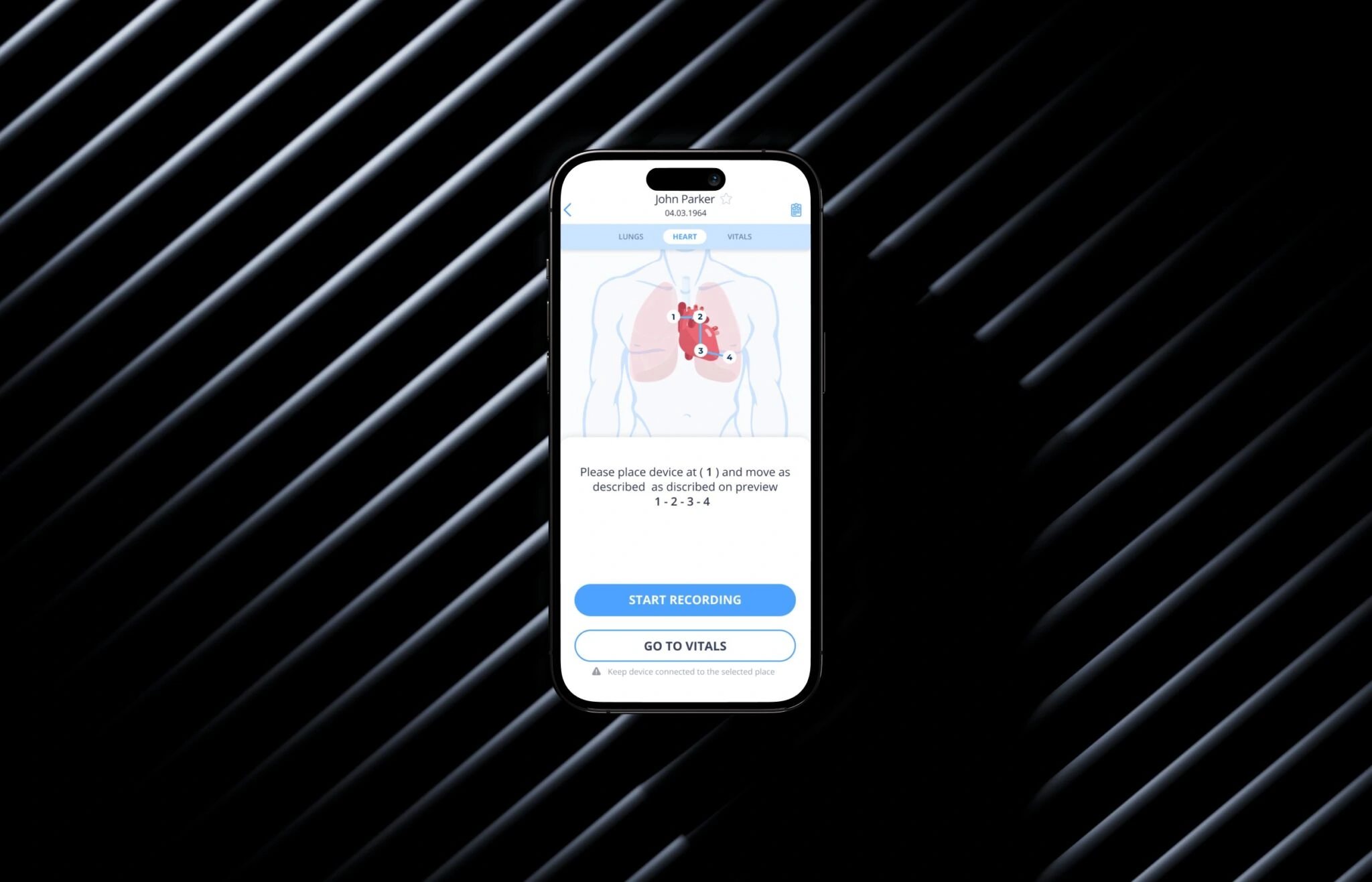
- The on-premises classifier reads the text, plus voice tone for audio notes, and returns one of 7 emotional states with an intensity score in about 120 ms.
- The engine gathers the last 20 messages, 14 days of mood check-ins, and the user's language, then prompts Qwen 2.5 32B with tone rules for that state.
- A short, warm answer arrives in about 1.8 seconds, often with one small step for stress relief: a breathing exercise, a journaling prompt, or a coping strategy that helped before.
- The detected state feeds the mood chart. If risk language shows up, the safety layer swaps the reply for crisis resources and pings the on-call clinician.
- Logs, embeddings, and backups stay in the client's AWS account. Admins see aggregate trends only; opening a full conversation needs user consent and leaves an audit trail.
UI/UX Design for Emotional Wellness
Nobody opens a wellness app when life is going great, and a successful mental health app has to earn the second visit. So we designed every screen for someone tired, anxious, or scrolling at 2 a.m. with one hand.
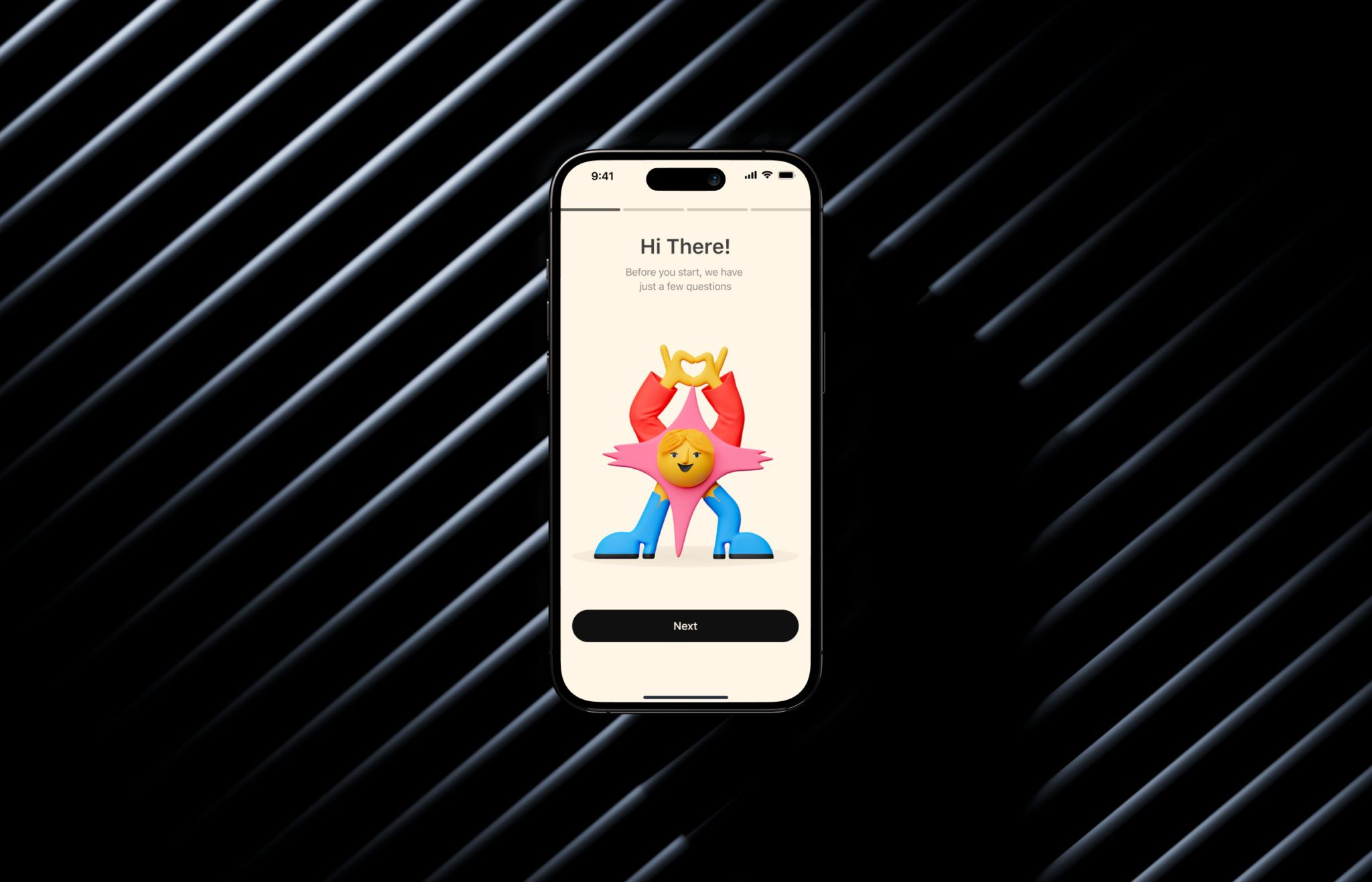
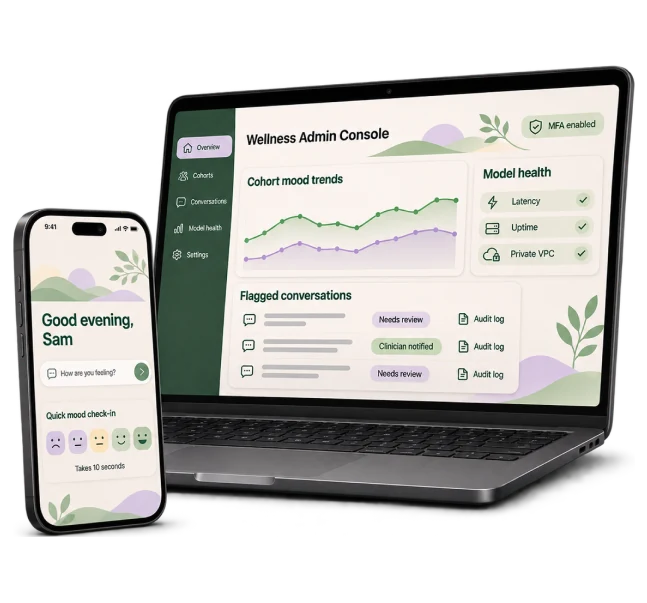
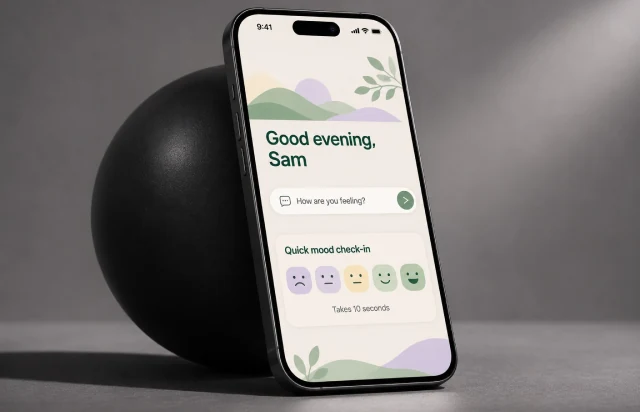
Before wireframes, we ran 12 short interviews with people from the client’s target audience who live with everyday mental health issues, plus two mental health specialists. Most had tried mental wellness apps and self-improvement apps from across the mobile app market and quit over streaks that punished a missed day. Their picture of a good mental health app was blunt: fewer choices, softer words, no guilt. We built around those user needs and left the rest out. The home screen holds three things: a greeting, the chat field, and a one-tap mood check-in with five faces. Push notifications are opt-in, capped at one a day, and never mention feelings on the lock screen, so users feel in control of what others might see.
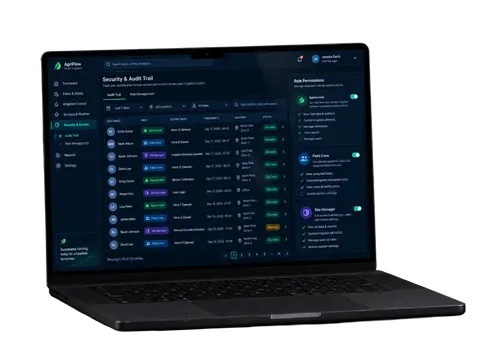
Colors stay muted while contrast still meets WCAG AA, and dark mode switches on after 9 p.m. The Next.js admin console shows cohort mood trends, a flagged-conversation queue, and model health on one page. In the first usability round, 9 of 10 testers finished onboarding in under two minutes, and that user feedback trimmed the signup form from seven fields to three, closer to user expectations for a first visit. Of all the mental health app features, testers rated the daily check-in highest, since it supports emotional well-being in ten seconds flat.
— Timeline
Five Phases, Clearly Defined
Discovery & Compliance Mapping
- Mapping every path patient data could take
- Agreeing what the MVP stores and for how long
- Defining 7 emotional states with a clinical psychologist
AI Prototyping
- Benchmarking Qwen 2.5 7B, 14B, and 32B in both languages
- Training the first emotion-detection classifier
- Drafting tone rules and crisis escalation logic
Agile Development
- Building the React Native app and Next.js admin console
- Setting up the private AWS VPC, PostgreSQL, and Redis
- Adding mood tracking, progress charts, and teletherapy booking
QA & Safety Testing
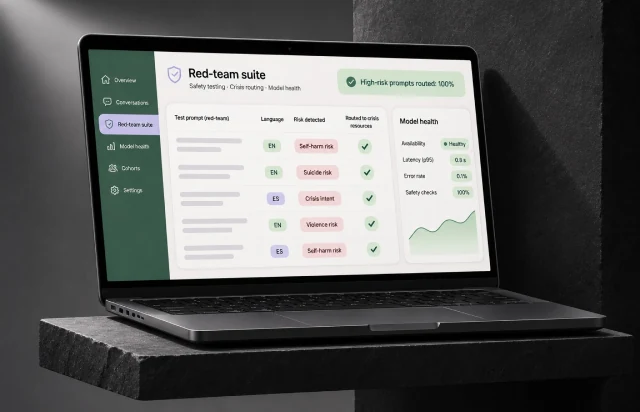
- Running ~1,200 red-team prompts in both languages
- Load testing at 300 concurrent conversations
- Auditing encryption, access logs, and MFA flows
Launch & Support
- Closed beta with ~250 users over 6 weeks
- Weekly review of flagged chats and model drift
- New features on the same 2-week sprints
Results
Before
- ✕A hosted-API proof of concept that could not pass a HIPAA security review
- ✕One reply style for every mood, and testers dropped off after ~2 sessions
- ✕A single language, while about a third of the target audience preferred the second
- ✕Mood notes kept on paper or in a separate journal app, invisible to therapists
- ✕No safety layer, no audit trail, and no record of who read which conversation
After
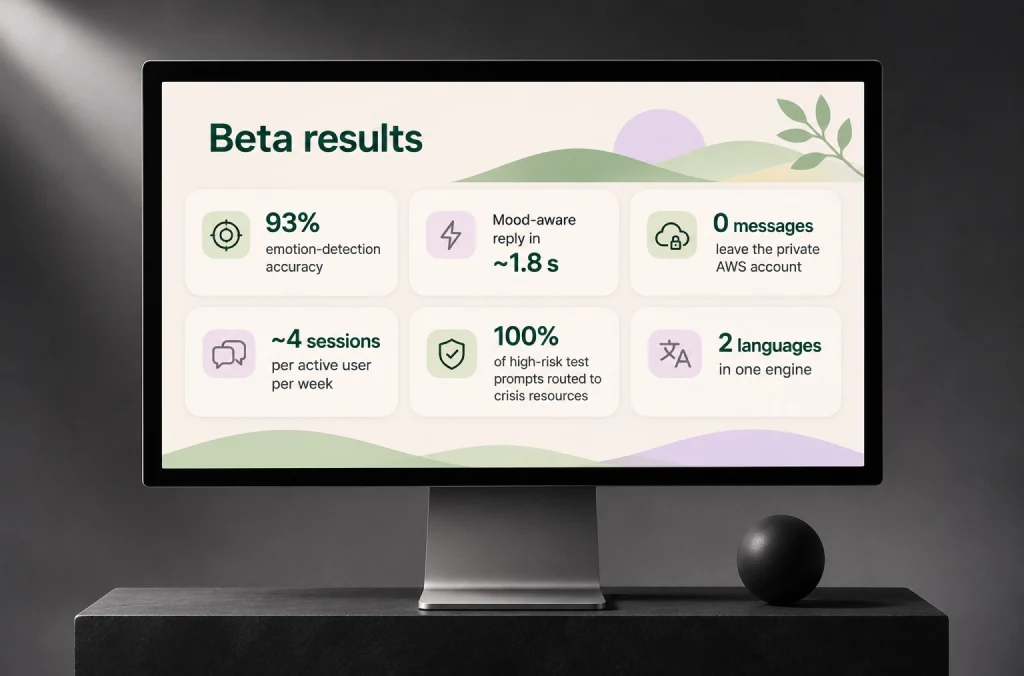
- ✔93% emotion-detection accuracy and a mood-aware reply in ~1.8 seconds
- ✔0 messages leaving the client's AWS account, with every access logged and MFA-protected
- ✔Two languages in one engine, each with native tone rules and safety phrases
- ✔~4 sessions per active user per week during the 6-week beta
- ✔100% of high-risk test prompts routed to crisis resources, plus one console for mood trends and flagged chats
Impact
— Verified Reviews
Our Reputation on Top Platforms
LITSLINK holds a 4.8 rating on Clutch and GoodFirms, with Top Developer badges on both. Healthcare clients most often mention careful handling of patient data, steady communication through compliance reviews, and engineers who push back when a requirement would put users at risk. See more of our healthcare software development work.
Have a Wellness App Development Project in Mind?
Planning mental health app development with AI at the core, or rebuilding a tool that failed its first security review? Tell us about your users, platforms, and compliance needs, and a LITSLINK specialist will reply within 48 hours. We can also run the private model on your own cloud infrastructure.
Thank you for your message. It has been sent.