





Building Two-Sided Marketplace Software for On-Demand High-Quality Photo Services
- ~12 min median creative match time
- 3 camera tiers from $25 per 5 minutes
- ~94% of gigs closed without a dispute
- ~38% of clients rebooked within 90 days
A US startup came to LITSLINK with a business idea: Uber for photographers. We built two-sided marketplace software around it, with one app where clients request a quick photo shoot and another where creatives pick up paid gigs nearby, so anyone can get high-quality photo services in minutes.
Request a Similar Solution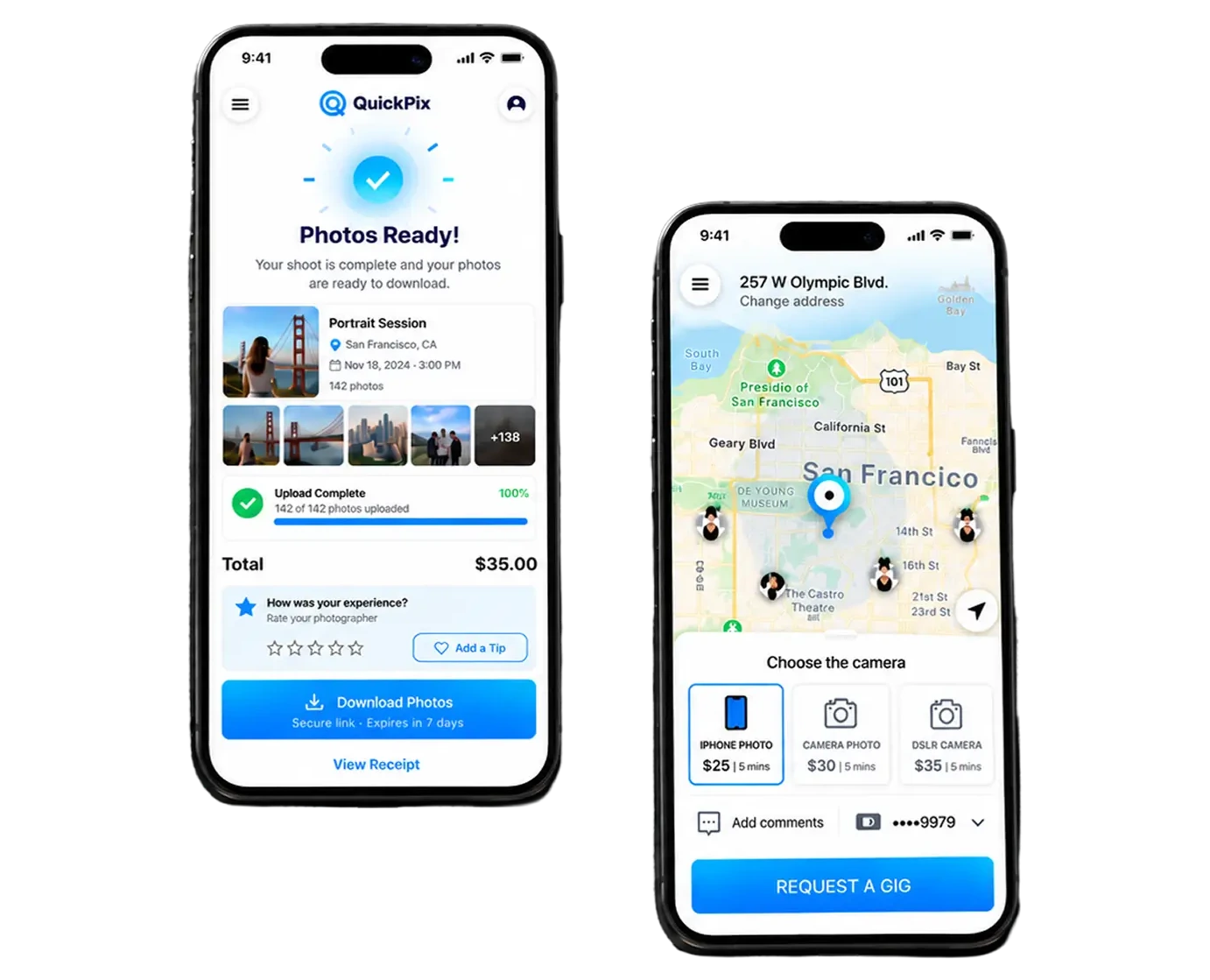
Project Details
The client is a US-based services startup that wanted photos on demand to work the way ride-hailing does: open an app, drop a pin, and a professional shows up.
 Client
- QuickPix
 Industry
- Media & Entertainment
 Solution
- Two-sided marketplace platform for on-demand photo services
 Service
- Platform Development + Mobile Apps + Backend + Full-Cycle QA
 Platform
- Mobile (iOS, Android), Web, Admin Panel
 Scope
- Full-stack marketplace software development: mobile, web, backend, QA, design
 Duration
- 8+ months
 Location
- US
Business Challenge: Developing a Two-Sided Marketplace Platform Built to Scale
Hiring a photographer in 2019 looked a lot like hiring a plumber in 2009. You asked around, emailed three people, waited a day for quotes, and paid a two-hour minimum when you needed twenty minutes at a birthday party. The founder saw the gap and wanted to connect buyers (people who need photos now) with sellers (creatives with a camera and a free afternoon). A two-sided marketplace connects both with one tap, and that was the pitch.
The catch with two-sided markets, and with this two-sided marketplace model in particular, is that neither group shows up first, so there are no network effects to lean on yet. Buyers won’t open an online marketplace with no photographers on the map, and photographers won’t keep an app open that never pings them. Traditional businesses can validate demand with a landing page. A two-sided marketplace has to validate demand for buyers and sellers at once, in one target market, before existing alternatives (a Craigslist post, a friend with a camera) win by default. And it has to do that on a startup’s initial investment, not Uber’s. Uber doesn’t own cars, and this platform wouldn’t own cameras. Three problems shaped the architecture.
-

Real-Time Matching Algorithm
A client drops a pin and expects a creative in minutes, not hours. The platform had to broadcast every request to online creatives nearby, settle acceptance races cleanly, and fall back gracefully when nobody inside a 5-mile radius picked up.
-

Dual-Interface Architecture
Buyers and sellers need different apps that read from one source of truth. A status change on the creative side has to land on the client's screen in under a second, or two people end up waiting on different street corners.
-

Transaction and Payment Management
Pricing runs per 5-minute block, so the final bill isn't known until the shoot ends. Card holds, time-based billing, tips, no-show refunds, and secure payments all had to reconcile without a human touching them.
Technologies Behind the Two-Sided Marketplace App






Our Two-Sided Marketplace App Solution
We built the two-sided marketplace app as a two-sided platform in the literal sense: two React Native apps on one Node.js backend, each delivering immediate value on first open. Clients get a map-first screen: type an address, pick a type of camera, see the price, tap Request a Gig.
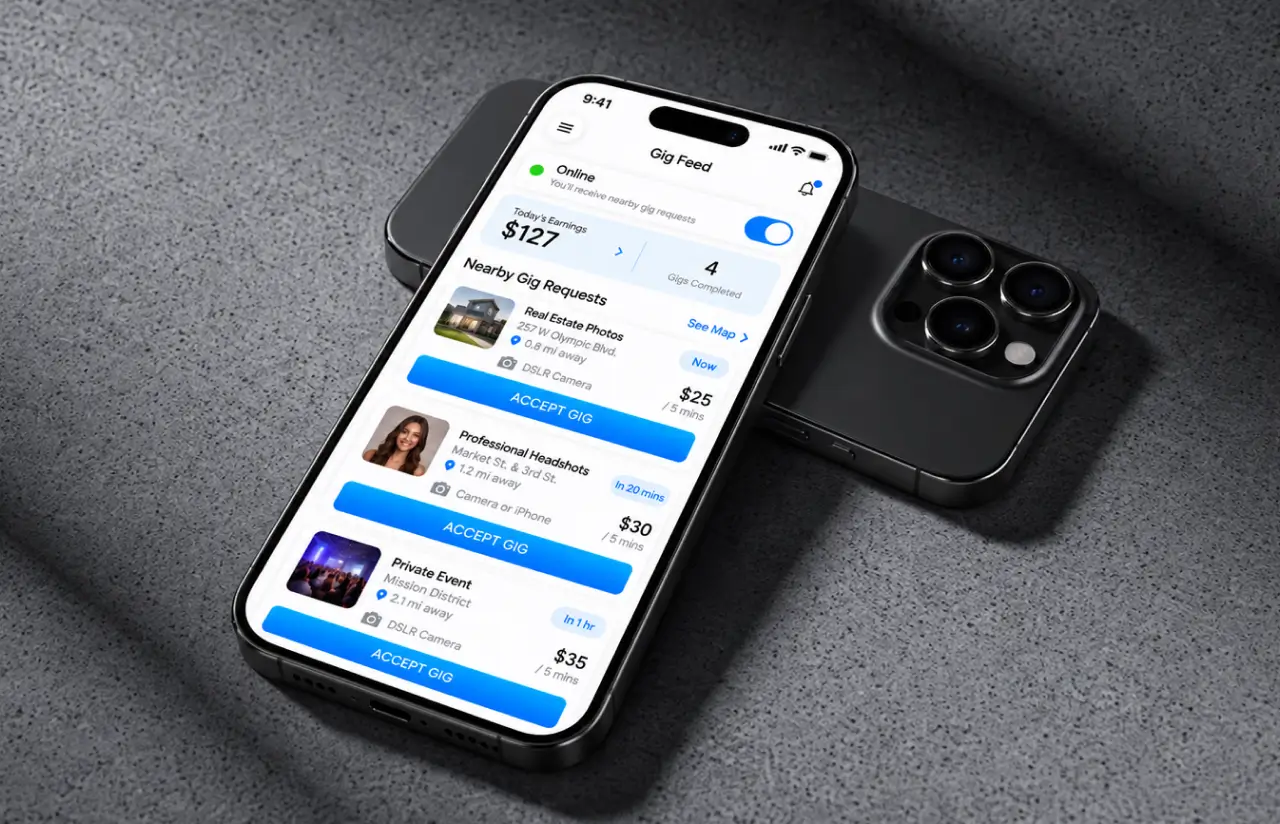
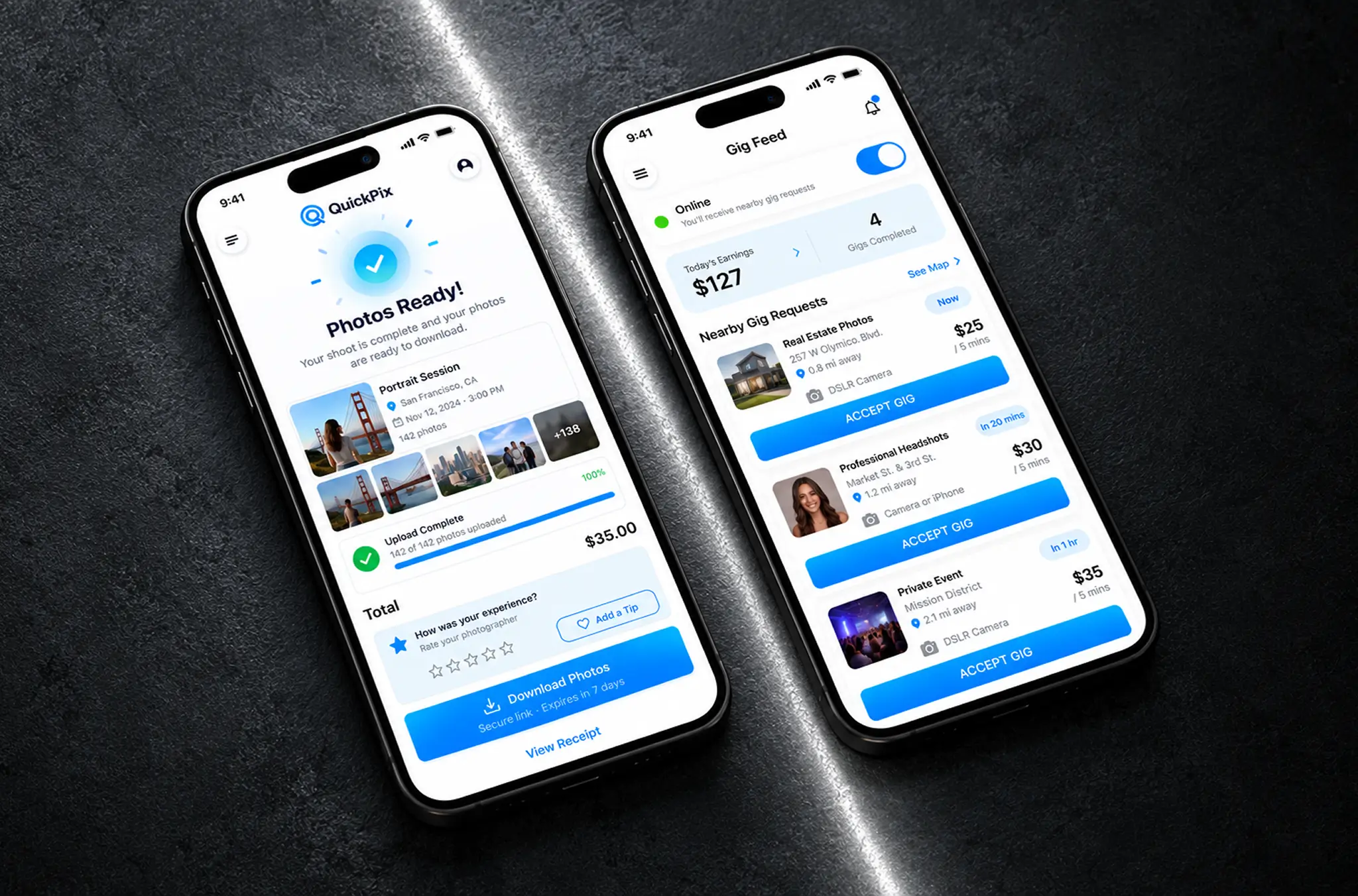
Creatives get a gig feed with online and offline modes, a start-the-shooting screen with a running meter, and a payout history. About 85% of UI components are shared between the two apps, which is how eight people shipped both to the App Store inside the same release window.
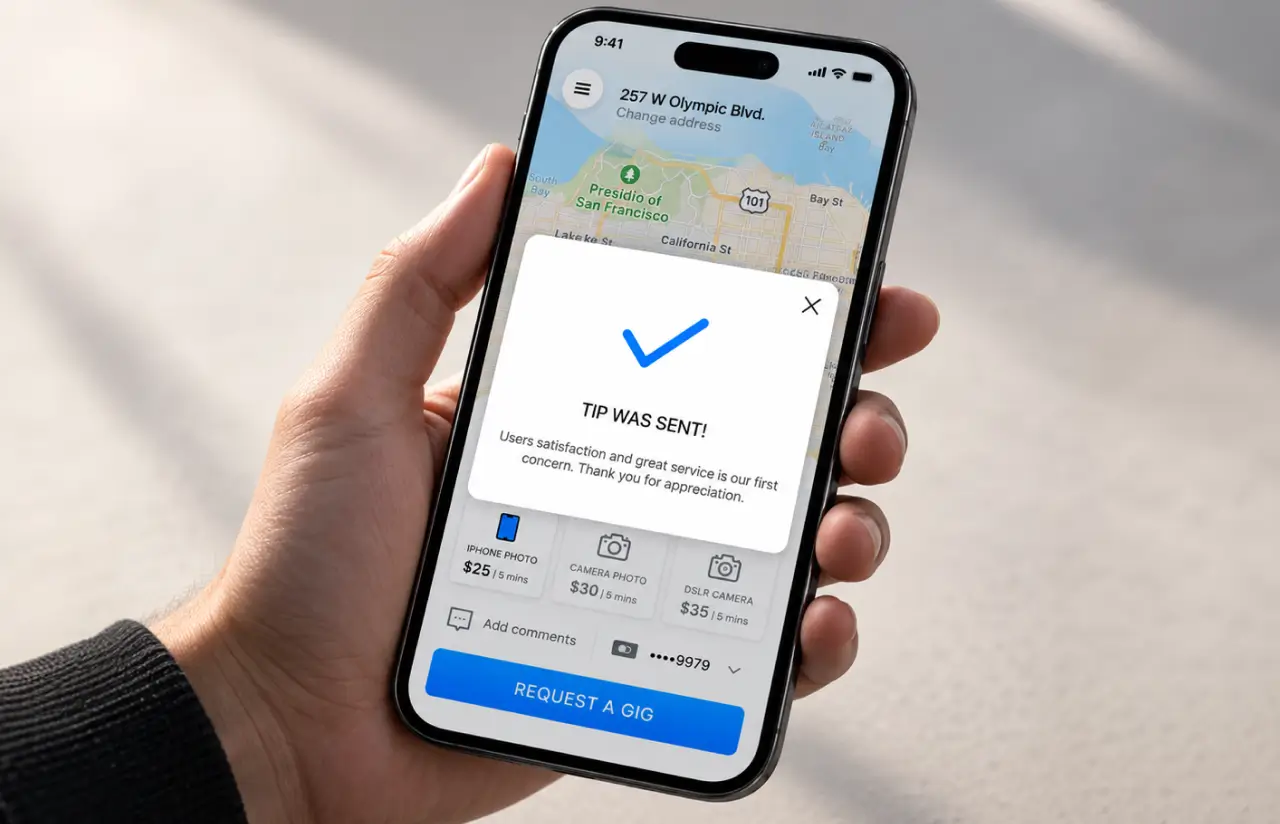
The business model is transaction fees on every completed shoot, with premium features and more diverse revenue streams left for a later phase, so the pricing strategy had to be simple enough to read on a phone. Three camera tiers set the price per 5 minutes. The client sees the price before requesting, a live estimate during the shoot, and the final charge when the creative taps Finish. That visibility is what stops platform leakage. When both sides can watch the meter, nobody has a reason to trade phone numbers and take the next deal off-platform. Card-only payments and in-app photo delivery prevent off-platform transactions without a single warning banner.
Liquidity came from the supply side first. Creatives are third-party sellers who keep their own gear and set their own hours. Nobody has to create listings, since going online is the listing, and every request reaches multiple sellers at once, the way one search hits multiple vendors on a retail site. Sellers manage their availability, the platform facilitates transactions, and that split kept the operation lean.
More sellers on the map meant faster matches; faster matches brought more buyers back, and that loop is what people mean by network effects. Sellers attract buyers, buyers attract sellers, and successful platforms make the loop cheap to run as more users join. Many successful marketplaces grow this way, and the two-sided marketplace examples founders like to cite all started with one city, one category, then out. In the San Francisco pilot, roughly 180 creatives and 1,400 completed gigs in the first three months were enough to hold median match time near 12 minutes.
-
Dual Mobile Applications
One app for clients, one for creatives, both on iOS and Android from a shared React Native base. Clients request and pay. Creatives toggle online, accept gigs, run the timer, and upload photos straight from the camera roll.
-
Real-Time Communication System
Gig status moves through arrival, start, shooting, and photos uploaded as a live timeline for buyers and sellers alike. In-app chat opens the moment a creative accepts, and push notifications fire on every state change, so nobody sits there refreshing.
-
Payment Processing Platform
A card hold goes on when the gig is requested, the shoot bills in 5-minute blocks, and the final charge, tip, and creative payout settle on their own. Refunds for no-shows follow a rule set, not a support ticket. Payment processing never leaves the app.
-
Admin Management Panel
A Vue.js dashboard gives the client's team gig history, creative approvals, refund automation tools, and dispute resolution in one place. Around 9 in 10 tickets close inside 24 hours with no engineer involved, which is platform governance on a startup budget.
-
Analytics and Reporting Engine
Match time, completion rate, revenue per gig, transaction volume, and creative utilization by neighborhood update daily. The founder reads marketplace dynamics by neighborhood from the same numbers: where to recruit more sellers next, where buyers wait too long.
-
Trust and Safety Framework
Email verification, creative approval before a first gig, a Report Gig button on both sides, and an SOS icon during the shoot. Photos sit behind a time-limited download link rather than an open URL, and secure payments run on tokenized cards, so neither party ever sees the other's details.
Building your own marketplace?
Request a Similar SolutionScrum Methodology
Project Journey
The platform went from a signed contract to two App Store listings in eight months of two-week sprints. Early sprints built the client app and the matching service, because a two-sided marketplace with nothing on the map has nothing to demo. The creative app, payments, and the admin panel followed once the request flow held up with real buyers and sellers testing it. That ordering answered the oldest of the two-sided marketplace challenges: the empty map.
- Weeks sprint cycles
- 2
- Sprints completed
- 16+
- of sprints delivered on schedule
- 94%
- Team members
- 8
How the Two-Sided Marketplace Works
-
Client sets location and camera
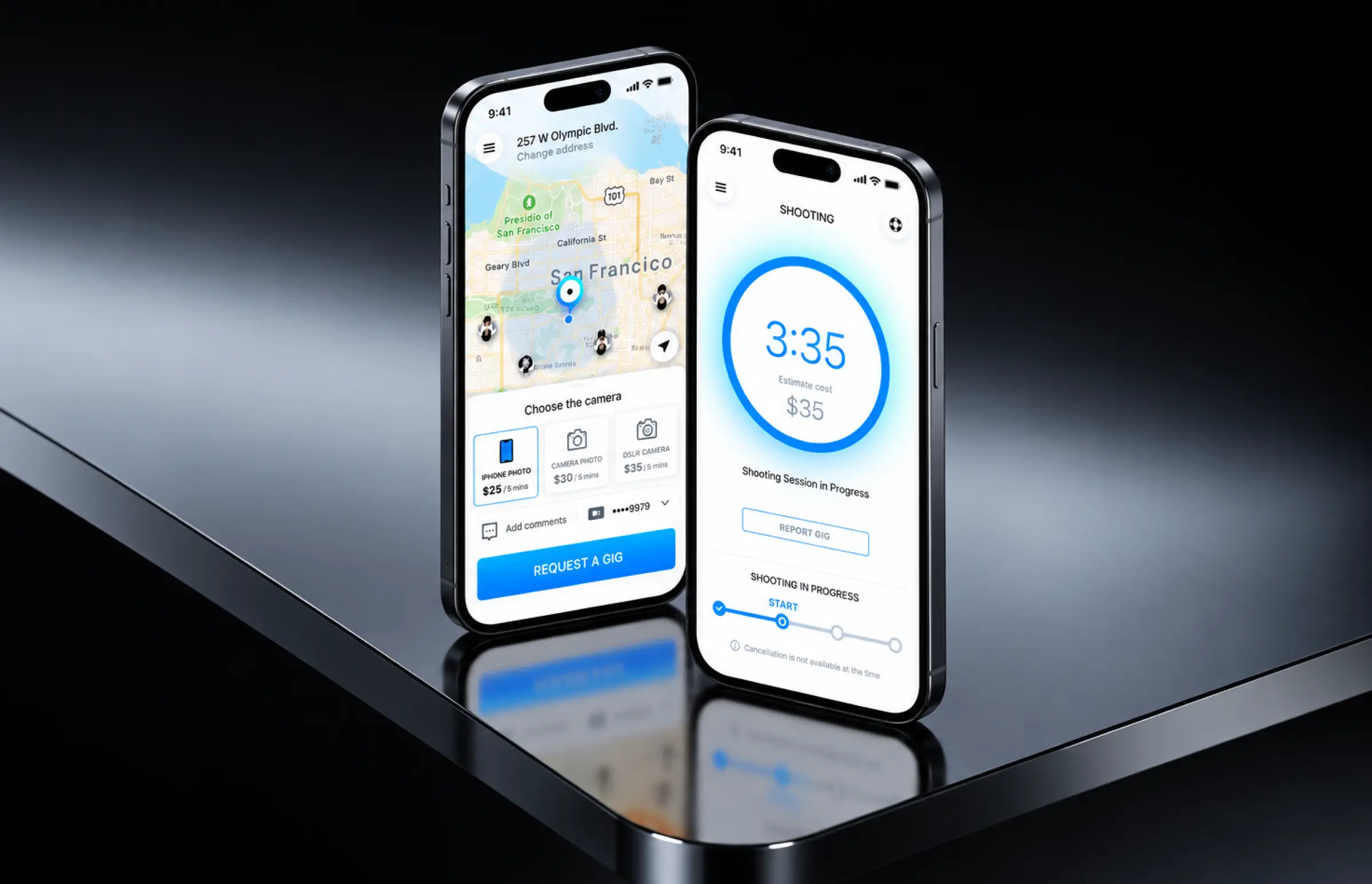
The client confirms the address on the map, picks an iPhone, camera, or DSLR, and sees the price per 5 minutes before tapping Request a Gig.
-
Nearby creatives get the request
Online creatives within range receive the gig with location, camera type, and any comments. First to accept wins it, and the client sees who is coming.
-
Client tracks the creative live
The creative's position updates on the map until arrival. The client can track whereabouts, open chat, or cancel before the shoot begins.
-
Shoot starts, meter runs
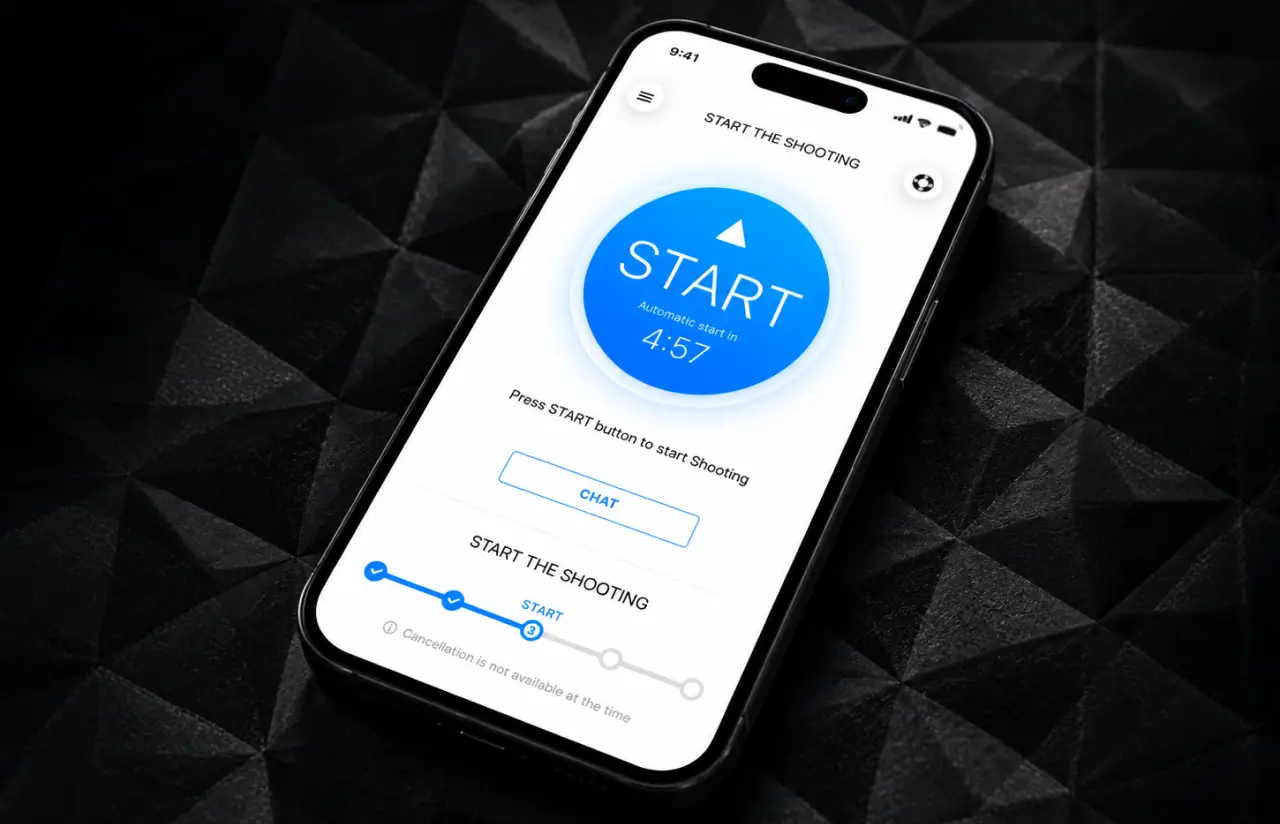
The creative presses Start, or the session auto-starts after a 5-minute countdown. A timer shows elapsed time and the running estimate on both screens.
-
Photos uploaded, payment settles
The creative uploads from the camera roll. The card is charged for actual time, the payout is queued, and the client can add a tip.
-
Client gets the photos
A download link lands in gig details within 2 hours and stays valid for a set number of days. Both sides rate the gig, and the record closes.
Scrum Process Flow
Marketplace app development on a two-sided marketplace app is hard to plan up front, because each side keeps changing what the other one needs. Two-week sprints meant the founder saw a working request flow by sprint 4 and moved the DSLR tier and tipped up the backlog after watching real creatives use it. Fifteen of the first 16 sprints shipped on the planned date.
Inside Each Sprint
-
Daily Scrum
15-min sync every morning
-
Retrospective
Inspect & adapt process
-
Sprint Review
Demo to stakeholders
-
Increment
Shippable product update
How We Delivered a Two-Sided Platform for Photo Services
-
Scope & Timeline
We define the project goal together, agree on priority features, and set a realistic delivery date and budget.
-
Feature Priorities
We build a ranked list of everything the product needs, starting with what matters most to the business.
-
Sprint Kickoff
Work is broken into 2-week cycles. At the start of each, we select the next set of features to deliver.
-
Development Cycle
The team builds, tests, and integrates features throughout the sprint.
-
Review & Feedback
At the end of every sprint, you see working software and give feedback that shapes the next cycle.
-
Delivery
Each sprint produces a shippable piece of the product. We review what worked, adjust, and move forward.
UI/UX Design: Intuitive Interface for Two-Sided Marketplace Software
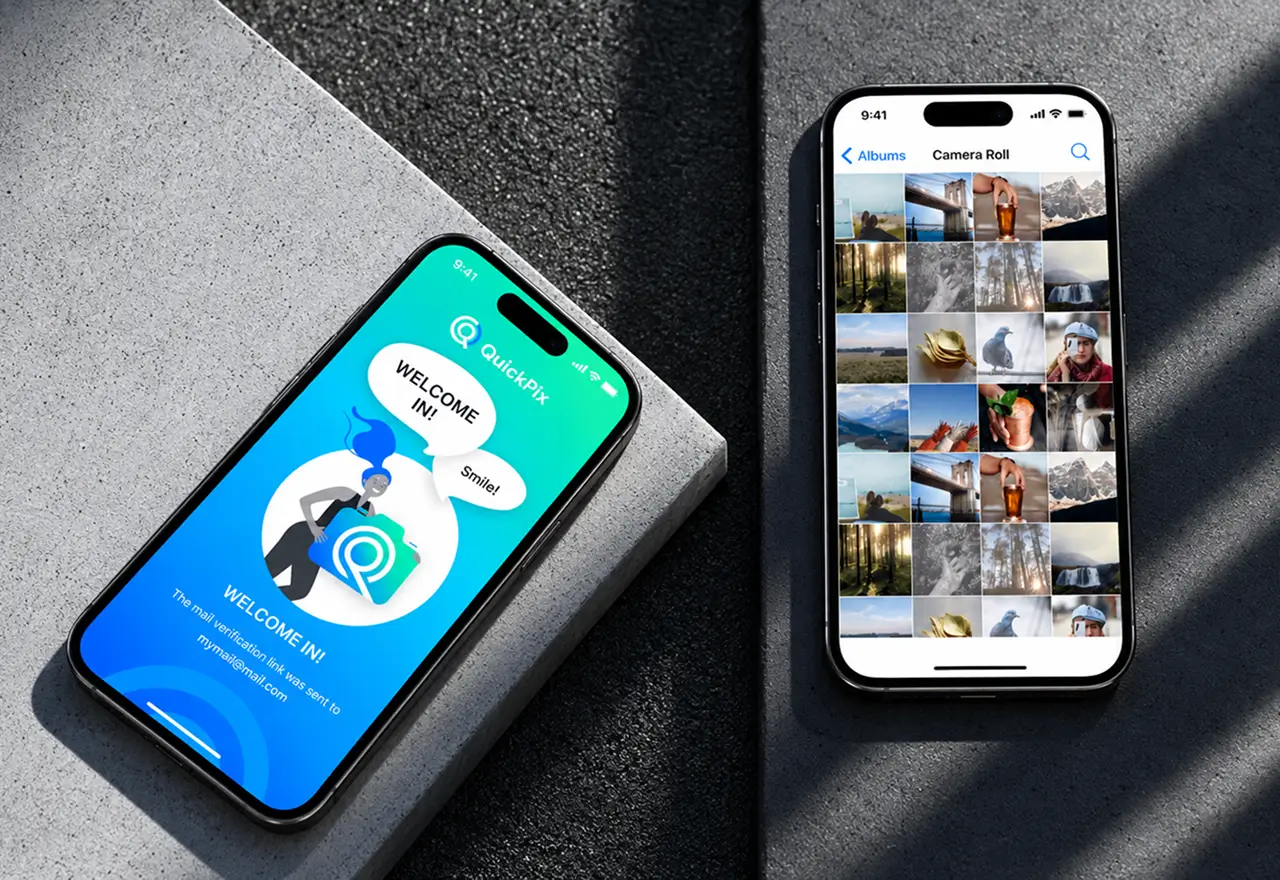
Two audiences, one visual system across the whole two-sided marketplace app. The palette is a blue-to-green gradient (#007aff to #0af0b7) on splash and onboarding screens, a flat blue (#0389fb) for every actionable element, and white for everything else. Poppins carries the type, because it stays readable on a live map and still looks friendly on a welcome screen with a cartoon photographer hugging the logo. Our product design team tested three onboarding flows and kept the shortest one: email, verification link, done.
The client app opens on the map with the address at the top and three camera cards underneath: iPhone photo, camera photo, DSLR, each with its price per 5 minutes. The selected card lifts and turns blue, the saved card shows its last four digits, and one large Request a Gig button sits at the bottom. Typically buyers decide in under a minute, and the screen is built for exactly that.
The creative side is built like other tools for photographers: big controls, no clutter, and one circle at the center. A blue Start button with an auto-start countdown, then a running timer with the cost estimate underneath, then a red 0:00 with an alarm icon when the paid window runs out, and the creative has to Proceed or Finish. Under it, a horizontal timeline walks both sides through arrival, start, photo, and completed, with a small note that cancellation is unavailable once shooting begins. A gig card in My Gigs carries the same timeline, the date, the address, and the amount, so a creative can scan a week of work on one screen.
Results
Before
- Booking a photographer took 1 to 2 days of emails and quotes.
- Two-hour minimums for shoots that needed twenty minutes.
- No way to know the price until the invoice arrived.
- Photographers filled downtime through word of mouth only.
- Cash, Venmo, or invoice, with no protection for either side.
After
- ~12-minute median match time in the pilot city.
- Price visible before the request, billed in 5-minute blocks from $25.
- Photos delivered within 2 hours through a time-limited download link.
- ~180 creatives onboarded and ~1,400 gigs completed in the first 3 months.
- Card payments, tips, and refunds settle inside the platform, with chargebacks under 1%.
Impact of the Two-Sided Marketplace Software After Launch
For the client, the two-sided marketplace software turned a business idea into revenue on day one. The business model is a transaction fee on every gig, with tips on roughly a third of them adding to creative earnings at no cost to the platform. Chargebacks stayed under 1% because the price was visible the whole time, and the admin panel absorbed disputes that would otherwise have needed a support hire. That is how the founder was able to balance platform profitability against a two-person operations team.
The bigger win was proof of product-market fit in one city. Service marketplaces live or die on repeat bookings, and here they landed near 38% within 90 days, which showed that buyers came back on their own. Creative utilization data now points to where to attract sellers next and which neighborhoods already attract buyers with no marketing spend, and more buyers in a district is the signal to recruit there. Opening a second city is now a marketing decision, not a rebuild.
Want a two-sided marketplace that earns from its first transaction?
Request a Similar SolutionWhat's Next
The current version handles one category in one city. Most successful marketplaces add the layers below after liquidity and the first network effects, not before, and the same holds for multi-sided platforms in general. The roadmap the client and LITSLINK agreed on covers four areas:
- Advanced Analytics Dashboard With Predictive Insights: demand heatmaps by hour and neighborhood, so creatives go online where requests are about to spike instead of where they were yesterday.
- Blockchain-Based Trust System: portable creative ratings and tamper-proof gig records a photographer can carry to other marketplaces, which makes the platform the easier one to join.
- AI-Powered Pricing Optimization: surge and off-peak pricing by camera tier, tuned on completion data rather than the flat rate card that launched. The business model stays a transaction fee. Only the rate moves.
- AI-Powered Matching Engine: rank nearby creatives by rating, camera history, and acceptance speed instead of first-come-first-served, which should pull match time on the two-sided marketplace under 10 minutes.
Verified Reviews
Our Reputation on Top Platforms
LITSLINK is consistently rated among the top software development companies on Clutch (4.8, 70+ reviews), GoodFirms (4.8, 30+ reviews), and similar platforms. The president of this client’s company described our communication as top-notch and our attention to detail as best in the business. See more of our photo and video app work.
Have a Marketplace Software Project in Mind?
Planning to build two-sided marketplace apps of your own, or running an online marketplace that has outgrown its first version? Tell us which buyers and sellers you want to connect, and we will come back within 48 hours with a scope and a number.
Next steps:
- LITSLINK specialist reviews your request and contacts you to discuss the details;
- If needed, we can sign an NDA before moving forward;
- We send a project proposal – estimates, timeline, and team CVs included;
- After launch, we stay on for any updates your product needs.
- 48h Response
- 1540+ Projects
Thank you for your message. It has been sent.