






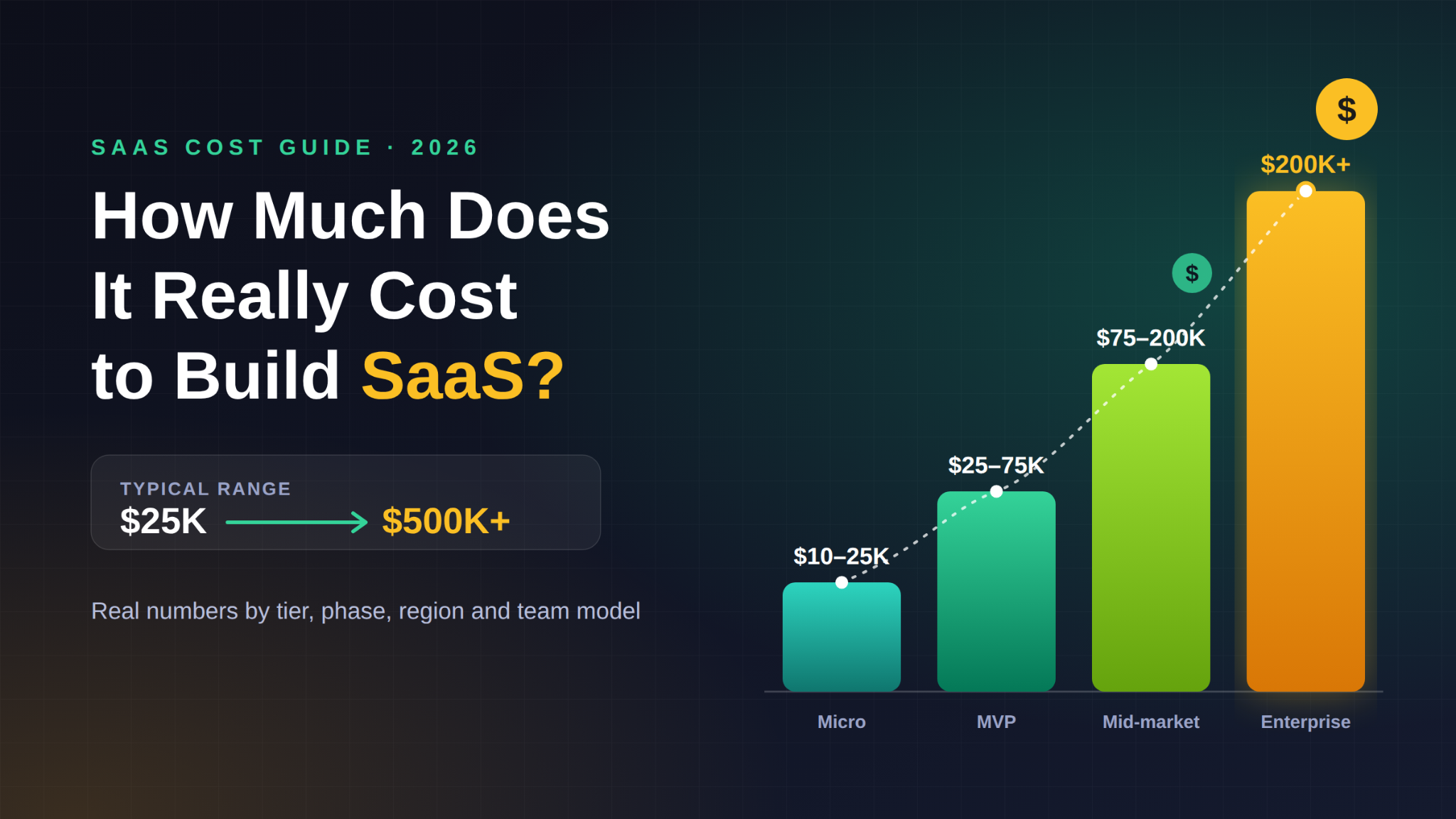
For 2026‚ pricing ranges from the low of $25000 for super lean MVPs to $500000+ for market-ready enterprise-grade Saas app development. However‚ most medium-complexity SaaS applications fall in the $75,000- $200,000 range. The price has far more to do with features‚ compliance, and tech stack than with the size․
Key Takeaways
Building an MVP costs between $25,000 and $70,000. A medium-complexity SaaS platform ranges from $70,000 to $180,000. For an enterprise SaaS product, expect to spend $200,000 to $500,000 or more.
- Location Matters: In-house developers in the US or UK may cost $150-220/hour, nearshore teams may cost $60-110/hour, and offshore teams in Eastern Europe and India may cost $25-60/hour.
- Compliance Adds Real Money: In 2026, SOC 2 Type II compliance costs an extra $20,000 to $50,000 (including the audit). HIPAA compliance also increases costs by 20-35% compared to a typical B2B product.
- Why Two Quotes Can Differ by 5-10x: Vendors often quote two different SaaS solutions. One quote may include only the build cost. The other might include discovery, infrastructure, compliance, and post-launch support costs as well.
Pricing a SaaS product is different from building a website or a single app. You’re not just designing for one client. The system is big; you must keep each customer’s data separate and bill them monthly. If a SaaS quote goes wrong, it’s often because these factors are missing, not because of math errors.
This also explains why you might receive two quotes for what seems like the same product. One vendor may only quote the development work, while another includes everything: discovery, infrastructure, compliance, and maintenance.
Based on 2026 pricing from development vendors, a SaaS MVP typically starts at around $25,000, while a mid-scale product often falls between $70,000 and $180,000. Enterprise-level applications can reach $500,000 or more. Treat these figures as reference points rather than fixed prices, because features, integrations, and compliance requirements can move the final cost well beyond them.
Your company’s context is key. A pre-seed founder testing an MVP will have one number. A funded startup going live will have another. An enterprise team checking compliance costs will have a different number too. It’s best to find your own starting point using the tier and phase breakdown below instead of relying on the headline range alone.
How Much Does It Cost to Build a SaaS Product? Quick Numbers by Tier
The table below shows the cost of a typical SaaS product at each tier. It ranges from a basic one-feature product to a full enterprise solution. For each market research entry, you’ll find the usual pricing range, the build time, and what’s typically included in the product.
How Much Does It Cost to Build a SaaS Product? Quick Numbers by Tier
The table below shows you what a typical SaaS product costs at each tier, from a basic one-feature product all the way to a full enterprise SaaS product․ For each market research, you’ll see a typical pricing range and how long it takes to build, as well as what is typically included in the product․
| Tier | Typical Cost | Timeline | What’s Included |
|---|---|---|---|
| Micro SaaS | $10,000–$25,000 | 1–3 months | A single-feature tool, often built by one developer |
| Basic SaaS / MVP | $25,000–$75,000 | 3–6 months | Standard core features, a small team, simple integrations |
| Mid-market SaaS | $75,000–$200,000 | 6–12 months | Advanced features, full multi-tenancy, third-party APIs |
| Enterprise SaaS | $200,000–$500,000+ | 12–24 months | Compliance (SOC 2, HIPAA, GDPR), custom workflows, white-labeling, SLAs |
SaaS Development Cost by Phase: Where the Budget Actually Goes
Many vendor quotes simply cover the design phase and the development phase․ When you define the other three phases‚ it becomes more possible to compare between vendor quotes and avoid going halfway through the build process with an empty budget․
Discovery, Planning, and Development Tools Selection
During the discovery phase‚ the idea is further developed into a real plan․ It takes 4-8 weeks and costs between $15‚000 and $40‚000․ By the end of this phase‚ you should have a requirements document‚ an architecture document‚ and a cost estimate․ Do not write a single line of code before going through this phase․ Nothing is more expensive than rushing this part of the development cycle․ The architectural decisions you make here are going to cost you much more in the long run than whichever feature you decide to add‚ especially when it comes to how you do multi-tenancy․
UI/UX Design
A lean MVP can cost $8,000 to $20,000 to design. If user research and workshops are needed, the price jumps to $40,000 to $70,000. Cutting design costs might seem tempting, but good design pays off. For SaaS products, an intuitive design keeps customers longer after their free trial. It also means fewer support requests. So, if you save on design now, you may end up spending more later on support tickets and lost customers.
Development and Tech Stack Decisions
You’ll spend most of your budget here. The tech stack you choose matters for performance, security, and scalability. In 2026, most SaaS teams still use the same tools:
- Frontend: React or Next․js
- Backend: Node․js‚ Python or Go
- Database: PostgreSQL or MySQL
- Utilizing Cloud Infrastructure: AWS‚ Google Cloud‚ Azure
Standardized tools are usually easier to ship with and hire for than newer frameworks‚ which makes them the safer choice for most products․
QA and Testing
Testing often gets cut first when money is tight. But skipping it can be costly. Every bug you send to customers costs you three times: in support, lost customers, and your reputation. Fixing bugs before launch is much cheaper than after. So, choose a vendor that includes both automated and manual testing in their quote.
Deployment and Cloud Infrastructure Costs
It typically takes 40 to 120 hours of DevOps and engineering work to launch your product. This could cost between $4,000 and $15,000 at mid-market rates in 2026. Launching is just the beginning. Hosting, databases, and cloud services come with monthly fees that rise with usage. After launch, infrastructure continues to bill monthly. Many founders overlook this cost, even if they planned for it earlier. So, make sure to budget for both from day one.
Hourly Rates by Region: What Teams Actually Charge
Where your development team is based is one of the biggest factors in your SaaS budget. The same product can cost two or three times more depending on whether it’s built in the US, Eastern Europe, or Asia, mostly because of differences in local salaries and living costs, not in skill. That’s why it pays to compare rates across regions before choosing a team. Here are the approximate hourly rates you can expect in 2026:
| Region | Typical Hourly Rate |
|---|---|
| United States | $50–$100 |
| Eastern Europe | $40–$80 |
| India and Southeast Asia | $20–$50 |
A relatively lower hourly price may still not save money in the long run‚ however․ Time zone differences‚ lag in communication, and potential rework due to a skills mismatch can eat up 10- 15% of your anticipated cost savings․ While lower rates do not necessarily mean lower quality‚ there are experienced teams based in Eastern Europe and Latin America‚ who can deliver comparable results at a fraction of the North American cost․ The difference is not lower skills‚ but lower local costs․
Before signing with any budget team‚ you should ask to see the live products they have shipped‚ and talk to their previous clients directly‚ rather than relying on third-party testimonials․
Hidden and Ongoing Costs Most Founders Miss
The build is only part of what you’ll spend. These costs are easy to miss when you’re focused on getting to launch:
- Annual Maintenance: The cost of maintaining a SaaS product typically ranges from 15% to 25% of the initial development. This continues after launch and includes bug repairs, security updates, performance adjustments, and minor enhancements.
- Compliance: SOC 2, HIPAA, and GDPR are often left out of SaaS budgets. Beyond engineering time, they require ongoing risk assessments, control reviews, and documentation, and SOC 2 also involves recurring external audits. (See the FAQ below for how much it usually adds).
- AI Features: Depending on how complicated the features are, adding AI, such as chat assistants, smart search, or automated insights, can raise the overall development cost by 15–40%.
- Third-Party Integrations: Each external system that your product links to, such as payment processors, CRMs, and analytics tools, adds time to the development process and frequently costs money each month. The cost increases with the number of integrations required.
When all is said and done, first-year expenses are typically far more than the headline MVP price. Most businesses spend between $100,000 and $250,000 in their first year after adding operations, maintenance, and tools to the build.
In-House Team vs Agency vs Freelancers: Choosing a SaaS Developer’s Service
There’s no single right way to build a SaaS product. Each option has clear trade-offs which should be considered before you make any investment:
- In-house team: You get the most control, and your developers know your product inside out. But hiring, salaries, benefits, and management take a big upfront investment. This option makes the most sense once SaaS development becomes a permanent part of your business, not a one-off project.
- Specialized SaaS developers service or product studio: An experienced agency brings a proven process and a team that has built SaaS products before. That lowers the risk of costly architecture mistakes in the early weeks, when you make the most important decisions.
- Freelancers: Freelance marketplaces are flexible and can be cheap, but quality varies widely and coordinating several people falls on you. The gap between an $8/hour freelancer and a $45/hour senior engineer is usually smaller than the cost of fixing what the cheaper option builds.
Many successful companies combine models. They keep product leadership in-house, so the vision stays with them, and work with an external development team for the build.
Cost Reduction Strategies That Actually Work
This isn’t advice to cut corners. Each strategy below is a specific, proven way founders have lowered real SaaS budgets without weakening the product their customers pay for. The idea is simple: spend where it matters most, like your core features, security and user experience, and save everywhere else. Together, these strategies can cut tens of thousands of dollars from your budget and help you launch faster.
Launch a Lean MVP Instead of a Full-Featured First Release
It may be tempting to preload all the features‚ but it’s better to build an MVP first․ This approach will save you $20‚000 to $60‚000․ It will also allow you to see if anyone will pay for your product‚ before you get too far along․ Plus‚ a smaller initial release requires less testing and infrastructure․ Future features can be based on what real users are asking․
Use No-Code Tools for Non-Core Features
Your product aside‚ there are other parts of your service which might not need custom code․ For example‚ an internal admin panel‚ a simple onboarding form‚ or a help center․ The downside of no-code is that you will have somewhat less flexibility․ Only use no-code for secondary features‚ never your differentiator․
Use Open-Source Libraries Instead of Custom Software for Commodity Functionality
Some features are highly standardized across SaaS: user login‚ payments‚ and email notifications‚ for example․ There is almost never a reason to build your own․ There are battle-tested open-source libraries and companies like Stripe for billing‚ and any dollar not spent rebuilding standard features can be invested in areas where your product has differentiated advantages․
Negotiate a Fixed-Price Contract for a Clearly Scoped MVP
For a stable, clearly defined MVP, fixed-price contracting can provide budget predictability. New or changed requirements are normally handled through an agreed change-request process. Pay attention to how vendors react. If a development partner refuses fixed pricing on a clearly scoped project, it’s often protecting its billable hours rather than responding to real project risk.
How LITSLINK Approaches SaaS Application Development
At LITSLINK‚ we build SaaS products following this guide’s recommendations: The expensive decisions are made early and made right:
- SaaS Foundations From Sprint One: Multi-tenant architecture‚ billing infrastructure, and customer-sensitive data isolation are planned from the very first sprint․ But adding them after getting your first paying customer is far more expensive and risky․
- Discovery Built Around Your Product: Our discovery phase focuses on the specific trade-offs in your product‚ not generic best practices‚ so every major decision fits your business model‚ budget, and growth plans․
- One team from Start to Finish: We do it all in-house from architecture through to post-live support․ You will never be passed from vendor to vendor․
An example of this: a US-based B2B SaaS company had a CRM for their sales team of 14 that was highly effective for the tenured salespeople but overwhelming for new hires․ With a sales team of 24 in 18 months‚ rather than build features‚ we decided to tackle the biggest bottleneck: onboarding․ We built an LLM virtual assistant into our CRM that answers reps’ questions‚ guides reps through logging their deals‚ and gets new hires productive without disrupting any more senior reps’ time while they’re working their quota․ Check out our full LLM Chatbot for CRM Case Study․
Behind our work: 1000+ clients over 82 countries with 1540+ delivered projects․ Our global delivery includes 300+ engineers‚ US-based project managers, and European engineering teams for well-timed delivery with cost benefits‚ as mentioned in the rates section above․
Want to see what we build? Explore LITSLINK SaaS Development Services to learn how we take products from first idea to launch, including architecture, billing, integrations, and ongoing support. If you’re getting ready to build, open our SaaS Product Development like LLM Chatbot for CRM Case Study and Launch Checklist to see every step you’ll need to cover, so nothing important gets missed before your product goes live.”
Contact LITSLINK for a free consultation and a project-specific estimate. Tell us about your product, and we’ll show you what it will realistically cost to build, launch, and grow.
FAQs
How Much Does It Cost to Develop a SaaS Product?
The cost of an MVP will vary‚ but a ballpark figure is typically around $25‚000․ Enterprise-grade platforms can cost well over $500‚000‚ depending on the scale‚ while most commercial products in the mid-complexity range will cost $75‚000 to $200‚000‚ depending on the number of features‚ integrations‚ and compliance requirements․
Why Do SaaS Development Quotes Vary So Much Between Vendors?
Because vendors often price very different things under the same label․ One quote may include just the build‚ while another may include discovery‚ infrastructure‚ compliance, and the first year of maintenance․ Those extras can easily add up to more than the cost of the build itself․ That’s why two quotes for the “same” product can be 5-10 times apart․ Always ask exactly what each quote includes․
How Much Does SaaS Maintenance Cost After Launch?
A common guideline is to budget 15-25% of the initial build costs each year for maintenance activities (bug fixes‚ security updates, and minor improvements)․ Major feature development is not included in this guideline‚ and instead should be separately budgeted for․
Should I Hire an In-House Team or an Outsourced SaaS Developers Service?
It is usually safer to outsource your first product‚ because a team who has built similar products knows what mistakes not to make‚ while an in-house team who are new to building products do not know these things․ The point where you should consider building in-house is typically when you’re working on your 3rd or 4th major feature and working with an outside team is slowing you down more than it is speeding you up (see above the entire section)․
Does Compliance Really Add That Much to SaaS Development Cost?
Yes‚ this is one of the costs founders tend to underestimate․ Compliance-heavy projects‚ in particular‚ can add 15-25% of core development costs․ Fintech and healthcare solutions that need to comply with regulations are usually 25-40% more expensive to build than similar products in other segments․ Compliance is not something you try to add on to your tech stack or architecture at the end․ It defines your architecture and your data handling and documentation from day one․